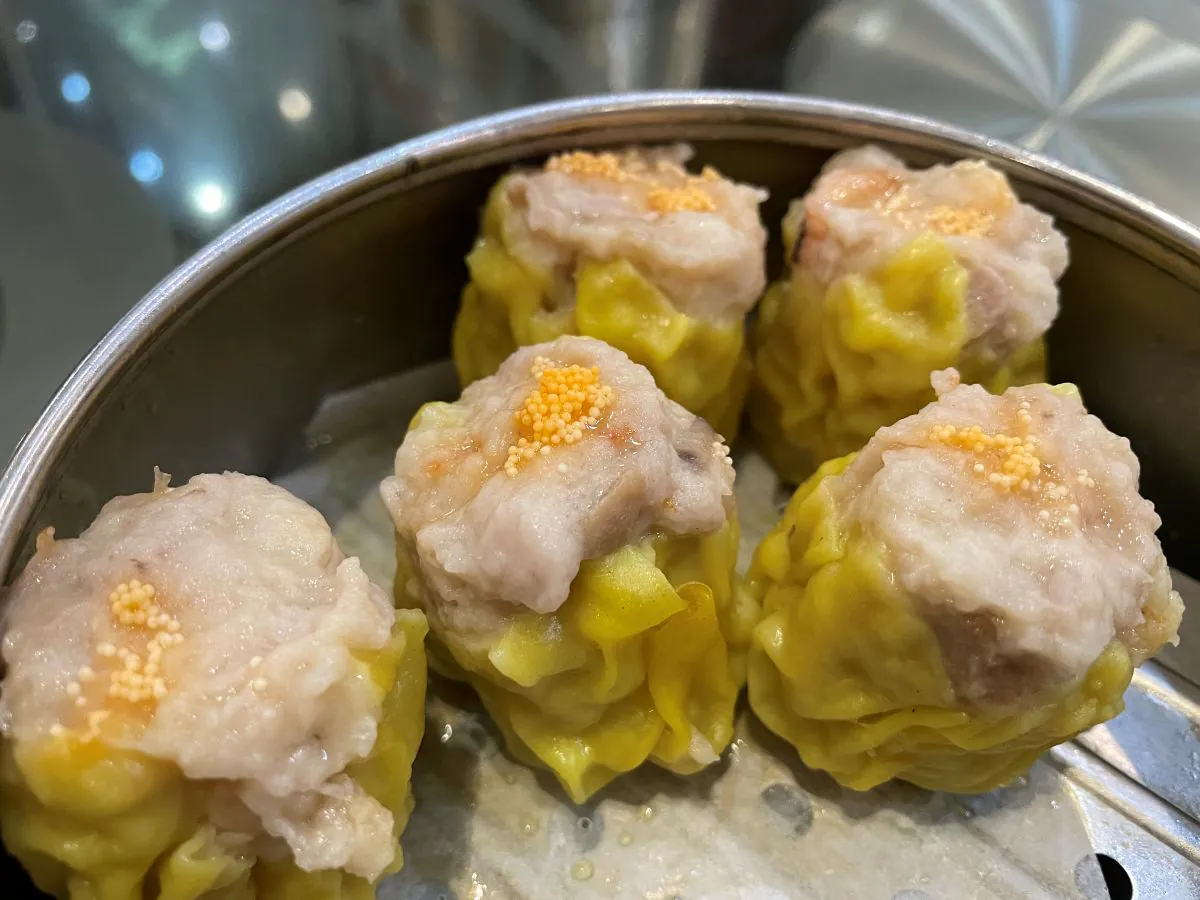
For people who are new to dim sum, the number of dishes can be a little overwhelming. There are steamed dumplings, baked buns, fried snacks, rice dishes, and things you may not immediately recognize. When I first introduce dim sum to someone who has never tried it, I usually don’t know where to tell them to start.
So, instead of trying to explain every type of dim sum, I thought I would share a few dishes from my own experience. Some are easy for first-timers to enjoy, while others might take a little more courage.
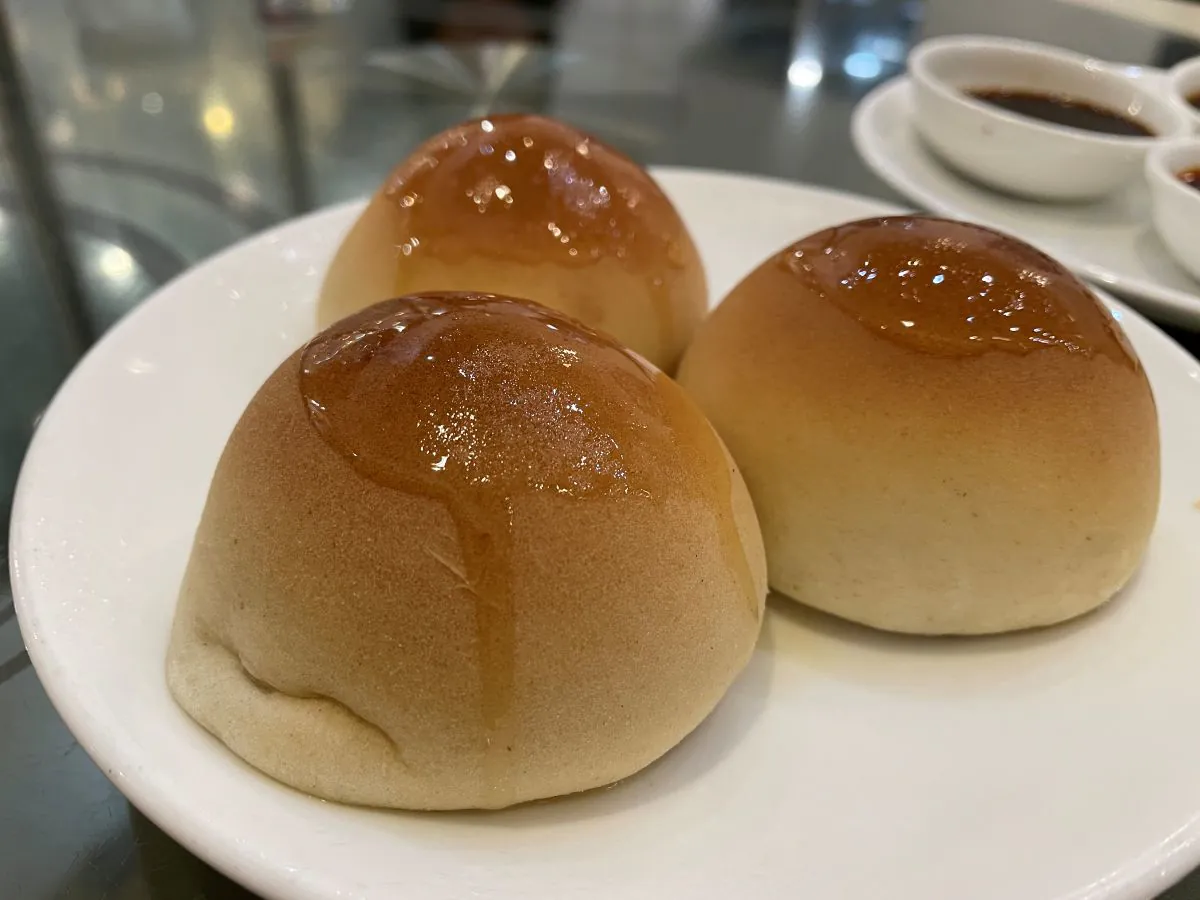
Baked BBQ Pork Bun
One of my favorites is the baked BBQ pork bun (叉烧酥包). It has a slightly sweet, flaky crust on the outside with savory BBQ pork inside. The combination may sound unusual at first, but it is actually a very approachable dim sum dish if you are trying dim sum for the first time.
For someone who usually eats sandwiches, pastries, or other baked snacks, this is probably one of the easier dishes to start with.
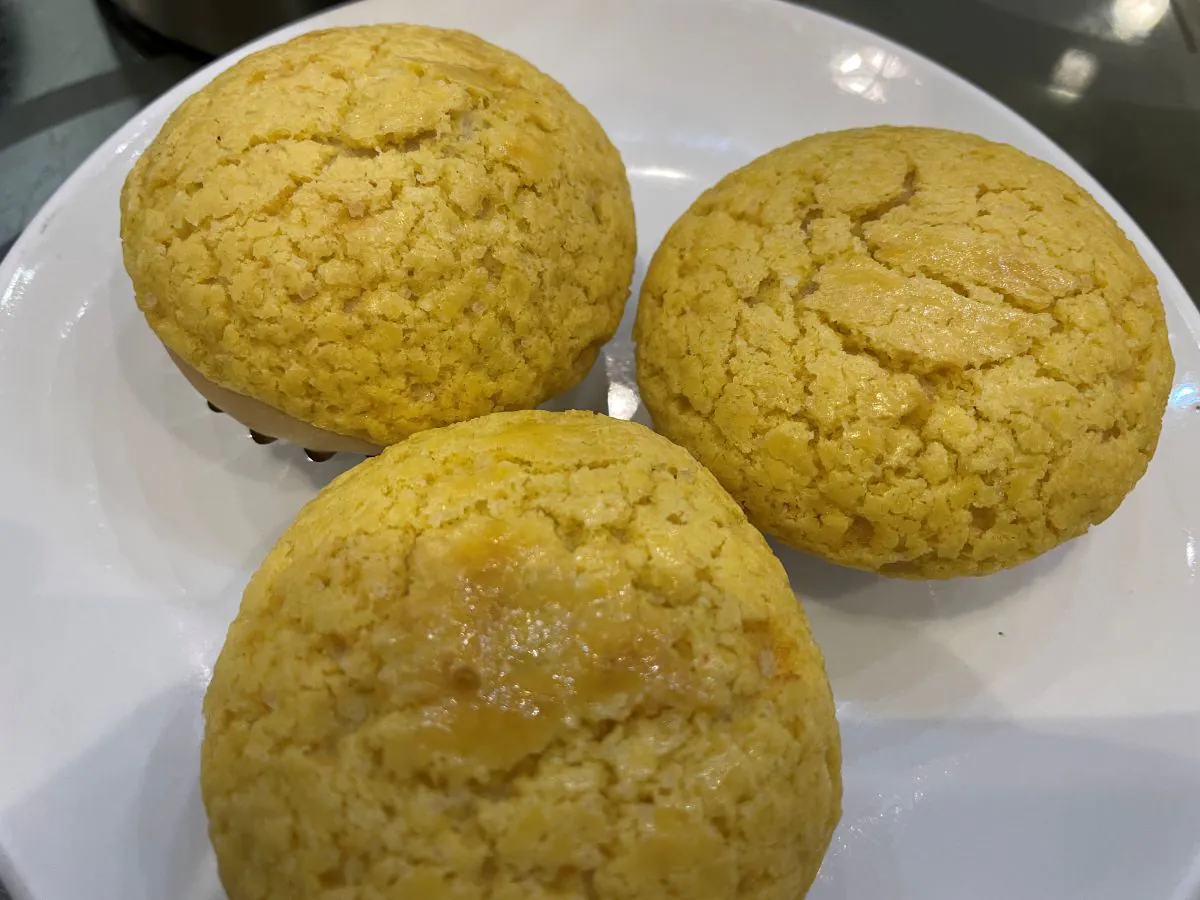
Baked Creamy Egg Yolk Bun (流沙包)
Another one worth trying is the baked creamy egg-yolk bun (流沙包). From the outside, it looks like a simple little bun. But when you break it open, there is a warm, rich, creamy filling inside.
The egg-yolk filling gives it a salty-sweet flavor that is difficult to compare with a typical American pastry. This is one of those dim sum dishes that is much more interesting once you take that first bite.
If you like fried food, there are plenty of dim sum choices for you, too.
A deep-fried shrimp roll (炸虾卷) is crispy on the outside with a savory shrimp filling inside. A deep-fried sesame ball (芝麻球) is very different. It has a crispy outside, a chewy texture, and a sweet filling in the middle.
These are good choices for someone who wants to explore dim sum but isn’t quite ready to try something that looks completely unfamiliar.
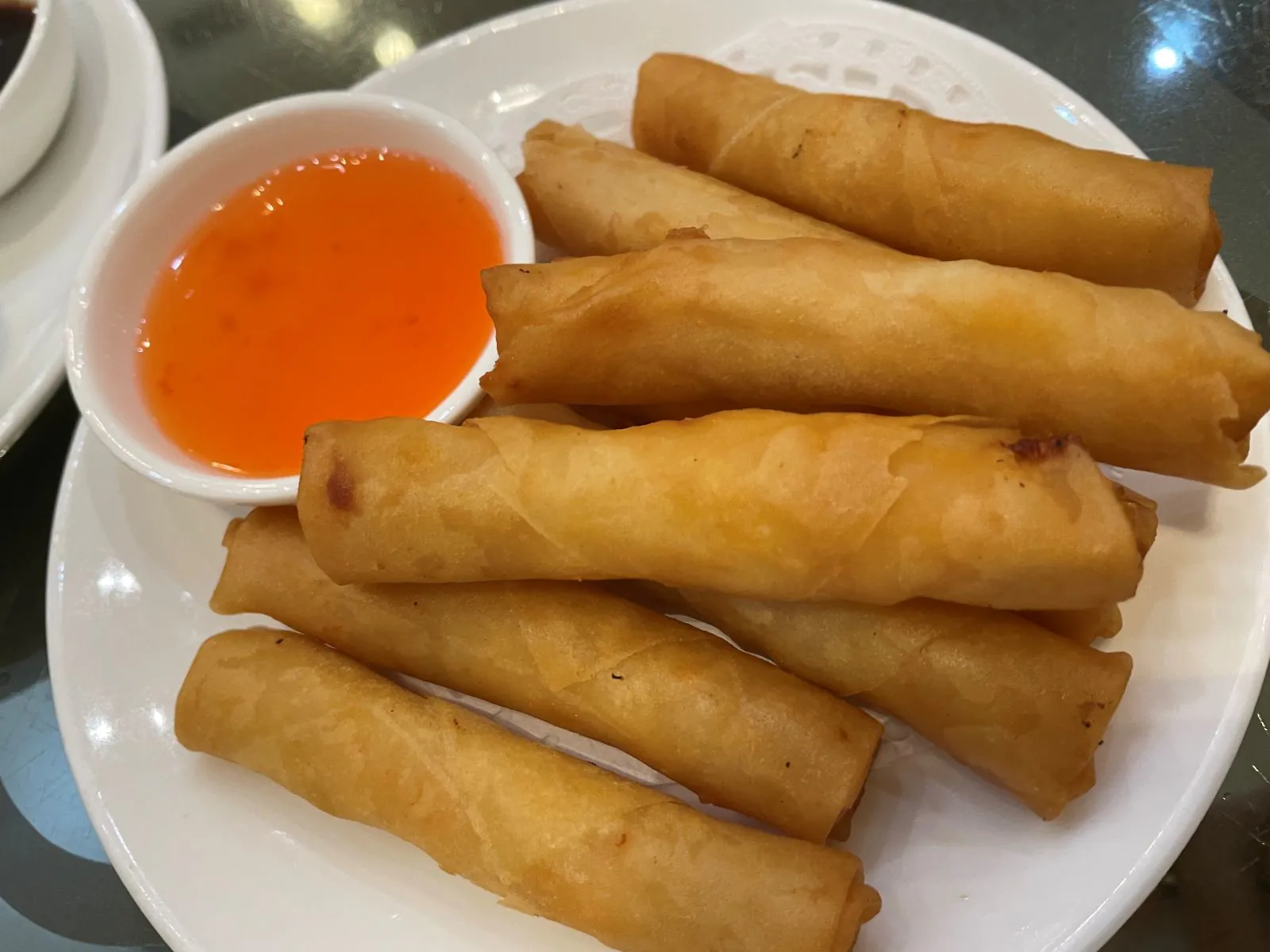
Deep-Fried Shrimp Roll and Sesame Ball
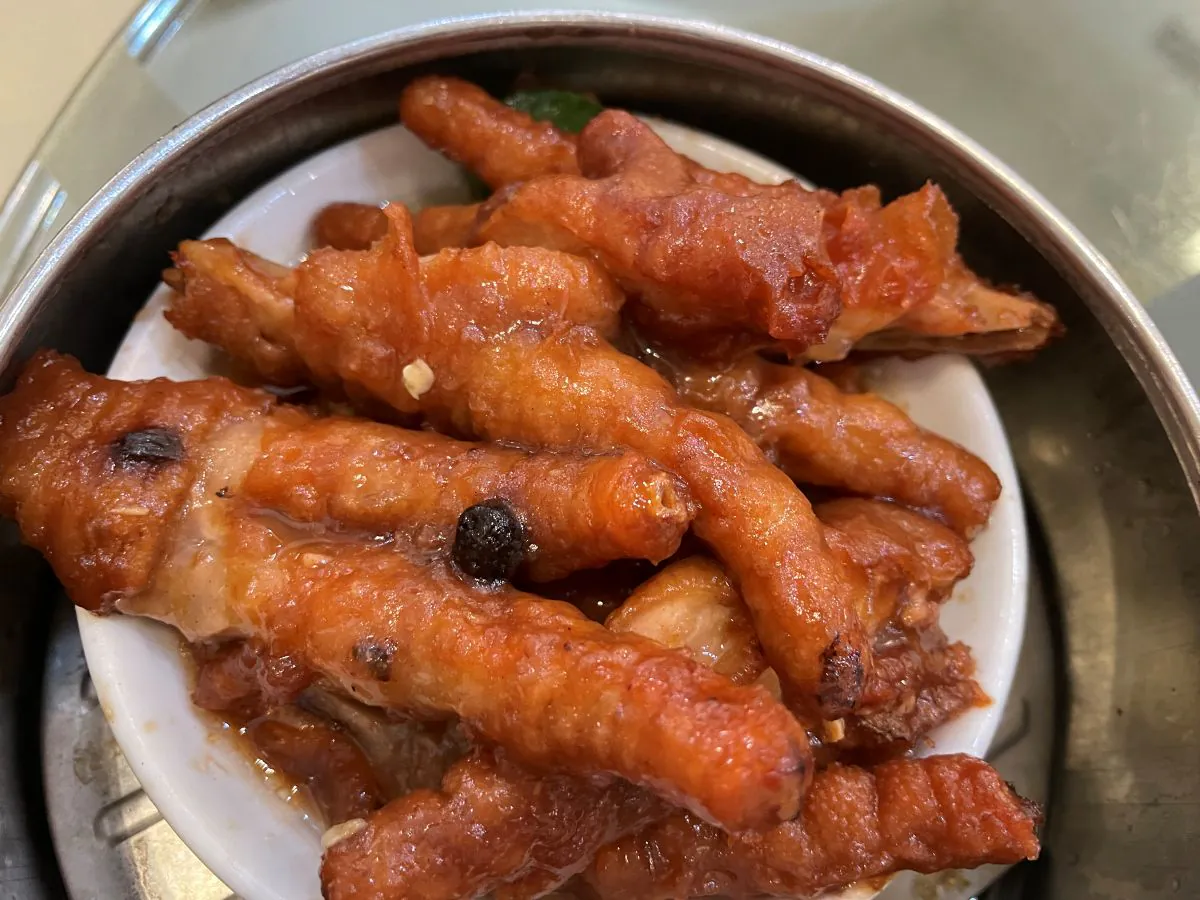
Chicken Feet: Maybe Give It a Try
Then there are the dishes that may take a little more courage.
Chicken feet (豉汁凤爪) are probably one of the dim sum dishes that can surprise someone who has never seen them on a restaurant table before. I understand that reaction. If you didn’t grow up eating chicken feet, seeing the claws can be a little difficult to get past.
But in dim sum, chicken feet are cooked until they are very tender and absorb the flavor of the sauce. The texture is completely different from what you might expect.
Do you have to like them? Of course not.
That is one of the things I like about trying different dim sum dishes. You can try something once and decide it isn’t for you. Or you might surprise yourself and find a new favorite.
Dim sum is also much more than dumplings and buns.
Baby cuttlefish with curry sauce is a good example. The texture and flavor are completely different from the baked and fried dishes. The curry sauce adds another layer of flavor, and it is the kind of dish that reminds me how much variety you can find in a traditional dim sum meal.
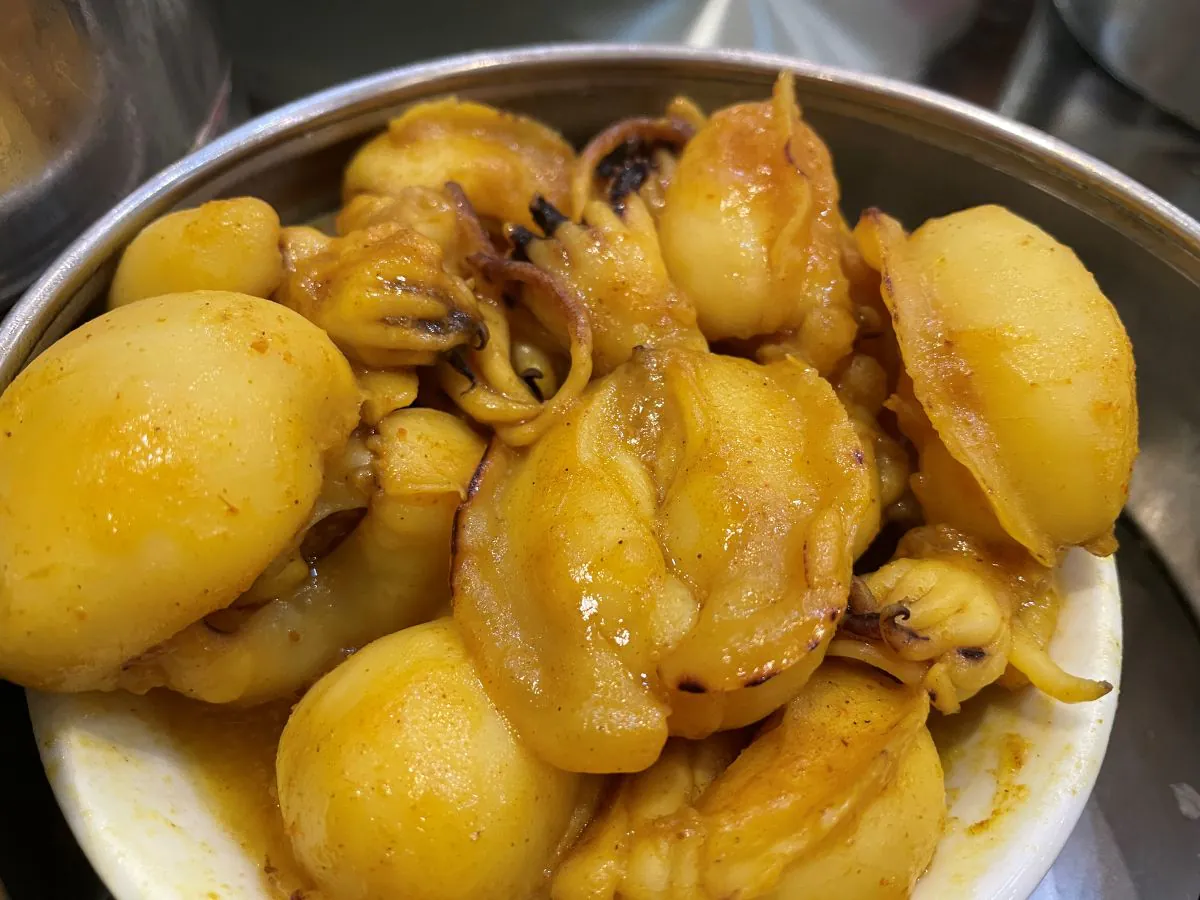
Baby Cuttlefish with Curry Sauce
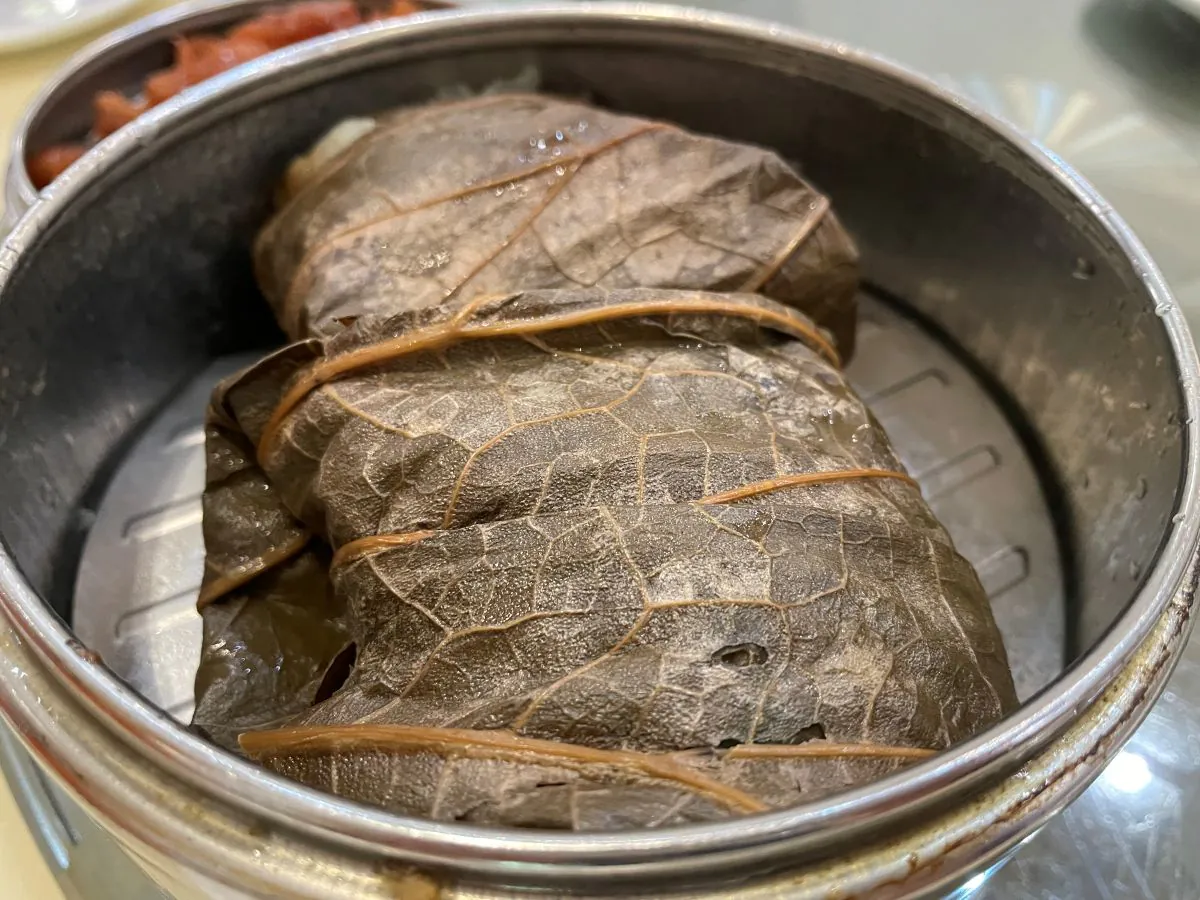
Sticky Rice Wrapped in Lotus Leaf (糯米鸡)
Another classic is stuffed sticky rice wrapped in a lotus leaf (糯米鸡).
When it arrives at the table, it may not look particularly exciting. It is wrapped inside a lotus leaf, almost like a little package. But open the leaf and you find sticky rice with savory fillings inside. The lotus leaf also gives the rice a subtle fragrance.
For me, part of the fun of dim sum is this little element of discovery. You don’t always know exactly what you are going to find inside.
Try a Little of Everything
If you have never had dim sum before, my advice is simple: don’t worry about ordering the perfect dishes.
Start with something that looks familiar. Try a baked bun or a fried sesame ball. Then choose something you have never tried before. Maybe it will be chicken feet. Maybe it will be cuttlefish. Maybe you will discover that sticky rice wrapped in a lotus leaf is your favorite.
You don’t have to like everything.
That is the beauty of dim sum. Because the portions are small, you can try a little of this and a little of that without committing to one big meal. You can discover new flavors at your own pace.
And perhaps that is the best way to understand dim sum—not by reading a long list of dishes, but by sitting at the table, choosing a few things that look interesting, and taking that first bite.
